
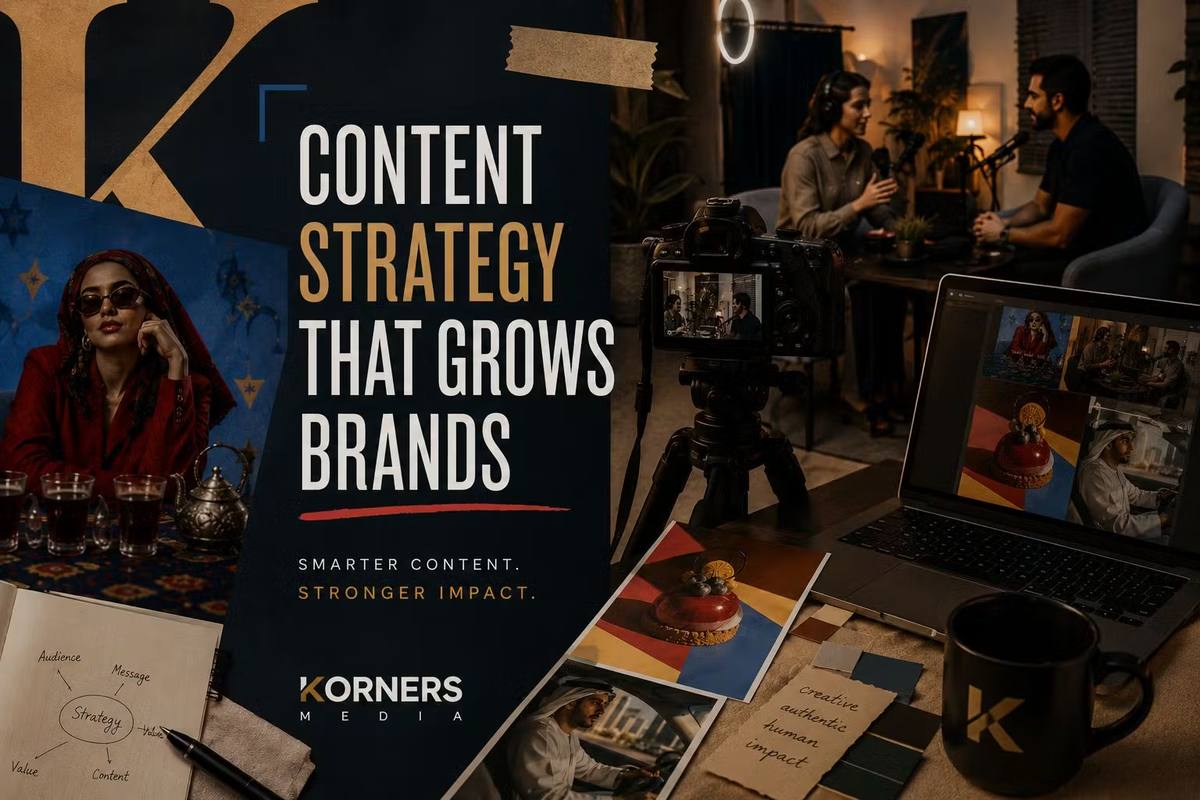
Master AI-driven content marketing with seven strategies designed for AEO, brand authority, and high-impact search visibility in the UAE market.
The Future of Content Marketing: 7 Strategies Every Business Should Use in the AI Era
Content marketing has changed more in the past two years than it did in the previous decade.
Artificial intelligence, changing search behavior, and evolving social media algorithms have transformed how people discover businesses. Customers no longer follow predictable buying journeys, and Google is no longer the only place they search for answers.
Today, people ask ChatGPT, watch YouTube tutorials, browse Reddit discussions, read blogs, and compare businesses before making a decision.
Businesses still relying on outdated marketing tactics—such as posting every day, following rigid sales funnels, or publishing generic promotional content—are becoming less visible.
Modern content marketing requires a different approach.
In this guide, we'll explore seven proven strategies that help businesses create content that performs better in search engines, AI-powered search, and social media while building stronger trust with potential customers.
Why Traditional Content Marketing Is No Longer Enough
Traditional marketing focused on publishing more content.
Modern marketing focuses on publishing better content.
Algorithms have become smarter. AI search engines understand context. Customers expect expertise rather than advertisements.
Businesses that adapt to this new environment gain a significant competitive advantage.
The following strategies are designed for today's digital landscape—not yesterday's.
Strategy 1: Create Content for AI Search, Not Just Google
What Is Ask Engine Optimization (AEO)?
We see it daily with Dubai brands—people are bypassing Google search bars.
They ask ChatGPT full questions instead. This shift forces a change in how we build a Digital Marketing Strategy UAE clients can actually grow with—enter Ask Engine Optimization. Here, your AI Content Strategy isn't about search rankings; it’s about structuring data so LLMs reference you. That is AEO in Marketing.
Where AI Finds Information
AI systems frequently rely on content from trusted and informative sources such as:
Well-written websites
Educational blogs
YouTube
Reddit
Documentation
Industry publications
Simply posting on social media isn't enough.
Your business should own valuable content that can be indexed and referenced across multiple platforms.
Practical Recommendation
Create resources that answer real customer questions.
Examples include:
Comprehensive blog articles
Case studies
FAQ pages
Video tutorials
Industry guides
These assets continue generating visibility long after they're published.
Strategy 2: Replace Sales Funnels with Core Messages
Why Modern Customer Journeys Are Different
The traditional funnel assumes customers move through awareness, consideration, and purchase in a straight line.
That rarely happens today.
Someone might:
Discover your company through YouTube.
Read your blog weeks later.
Ask an AI assistant about your services.
Visit your website months afterward.
Every piece of content should therefore stand on its own.
Build a Library of Messages
Instead of planning content around funnel stages, define the messages your audience must understand.
Examples include:
Common misconceptions
Hidden business costs
Industry myths
Buying mistakes
Proven solutions
When every article, video, or post reinforces one important idea, your brand becomes easier to remember.
Strategy 3: Start with Your Customer's Problem
Stop Introducing Yourself First
Many businesses begin content by talking about themselves.
Examples include:
We've been in business for 15 years.
We're an award-winning agency.
We've served hundreds of clients.
None of these statements matter until the reader feels understood.
Mirror Your Customer's Reality
Instead, begin with the exact problem your audience is facing.
For example:
Instead of saying:
"We're experts in social media marketing."
Say:
"You're publishing content every week, yet it still isn't generating consistent leads."
People pay attention when they recognize themselves in your message.
Understanding comes before persuasion.
Strategy 4: Sell the Cost of Doing Nothing
Features Rarely Change Buying Decisions
Businesses often compete using:
Better quality
Faster delivery
Lower prices
More experience
Unfortunately, competitors can make the same claims.
Show the Bigger Problem
A stronger approach is demonstrating what happens if nothing changes.
Ask questions like:
How much revenue is being lost?
How much time is wasted?
What opportunities are disappearing?
How much longer can the current strategy continue?
When customers understand the real cost of inaction, they naturally become more interested in solving the problem.
Don't simply sell your service.
Explain why delaying action is expensive.
Strategy 5: Position Your Brand with Absolute Clarity
Generic Businesses Become Invisible
Statements like:
"We help businesses grow."
mean almost nothing.
Customers cannot immediately determine whether you're the right fit.
Use the "What You Do for Who" Formula
Strong positioning follows a simple structure:
What you do + Who you help
Examples:
Branding agency for retail businesses.
Content marketing agency for e-commerce brands.
Web development for growing companies.
Video production for hospitality businesses.
Clear positioning attracts better-fit clients while reducing unnecessary competition.
Strategy 6: Build a Brand People Can Relate To
People Trust People
Corporate messaging often sounds polished but lacks personality.
Modern buyers want authenticity.
They want to know:
Who they're working with.
What your experience has taught you.
What mistakes you've made.
What opinions you stand behind.
Share Human Experiences
Businesses should regularly publish:
Behind-the-scenes content
Lessons learned
Client success stories
Industry observations
Founder perspectives
Your perspective is something competitors cannot copy.
That's one of your strongest marketing assets.
Strategy 7: Prioritize Quality Over Publishing Frequency
More Content Doesn't Mean Better Results
Many businesses believe they must publish every day.
This often leads to average content that receives little engagement.
Algorithms reward audience interest—not publishing volume.
Focus on High-Impact Content
Instead of creating seven average posts each week, invest that effort into producing one exceptional piece of content.
After publishing:
Reply to comments quickly.
Encourage conversations.
Update the article over time.
Repurpose it into multiple formats.
A single high-performing article or video can generate significantly more business than dozens of forgettable posts.
Key Takeaways
Modern content marketing is no longer about producing the highest number of posts.
It's about creating content that is:
Discoverable by AI and search engines.
Built around valuable messages.
Focused on customer problems.
Clearly positioned.
Human and authentic.
Educational rather than promotional.
High quality instead of high quantity.
Businesses that embrace these principles will build stronger authority, generate better-qualified leads, and remain visible as AI continues reshaping digital marketing.
Frequently Asked Questions
What is an AI content strategy?
An AI content strategy focuses on creating content that can be understood, indexed, and recommended by AI-powered search engines and assistants while also performing well in traditional search engines.
What is Ask Engine Optimization (AEO)?
Ask Engine Optimization (AEO) is the process of creating content that directly answers user questions, making it easier for AI assistants to reference your website.
Is SEO still important?
Yes. SEO remains essential, but it should now work alongside AEO. Businesses need content that performs well in both Google Search and AI-powered search experiences.
Why is quality more important than posting frequency?
Modern algorithms prioritize engagement, usefulness, and user satisfaction. High-quality content consistently outperforms frequent low-value posts.
How can Korners Media help?
Korners Media helps businesses develop AI-ready content strategies, strengthen brand positioning, produce premium visual content, and build marketing systems designed for sustainable business growth.